Let us begin where every honest conversation about women in leadership must begin: with the data. Not the comfortable data showcased in polished annual reports, but the unvarnished, longitudinal truth about where women actually stand in the structures that shape the global economy.
As of 2024, women hold just 29% of C-suite positions globally, a figure essentially unchanged from the year before and the product of eleven consecutive years of underrepresentation at every level of the corporate pipeline, according to McKinsey and LeanIn.Org’s Women in the Workplace report. Globally, women represent 43.4% of the workforce, yet occupy only 30.6% of leadership positions. In the Fortune 500, just 55 companies are led by female CEOs, roughly 11%, and that number has stalled.
Worldwide, only 7% of companies have a female chief executive, and a mere 9% have a female board chair, per the UN Global Compact. The World Economic Forum’s 2025 Gender Gap Report found that while the overall gender gap has closed by approximately 68.8%, workplace inequality at the most senior levels persists in ways that cannot be attributed to any deficit of talent, ambition, or capability among women.
These figures describe not a meritocracy in motion but a structural problem that no organization can afford to continue tolerating, particularly given that the evidence for what gender-balanced leadership delivers has never been stronger.
The Business Case: Evidence Too Strong to Ignore
McKinsey’s 2023 Diversity Matters Even More report, drawing on data from 1,265 companies across 23 countries, found that the business case for gender diversity has more than doubled since 2015.
Companies in the top quartile for executive gender diversity now show a 39% increased likelihood of financial outperformance relative to the bottom quartile. In 2015, that figure was 15%. The direction is unmistakable; this is not a passing fashion but a deepening structural advantage.
The findings extend beyond profitability. Companies with gender-balanced boards are 27% more likely to outperform financially, and BCG research found that firms with above-average leadership diversity reported 19% higher innovation revenues. A homogeneous leadership group, however individually talented, operates within a shared set of cognitive filters.
Gender-balanced teams bring genuinely different mental models to the table, and this produces higher-quality decisions. BCG also found that homogeneous groups tend to feel more confident in their decisions than diverse ones, yet more often turn out to be wrong.
On governance risk, MSCI’s analysis of more than 6,500 boards worldwide found that companies with higher proportions of women in leadership were significantly less likely to face controversies involving bribery, fraud, or shareholder disputes. Gender-diverse boards bring broader stakeholder empathy and stronger risk sensitivity, creating governance structures less susceptible to the groupthink that often precedes corporate scandal.
One important caveat exists: correlation is not causation. Researchers, including Harvard Business School’s Robin Ely, have argued that diversity alone does not drive performance; what matters is diversity combined with genuine inclusion, where different voices are not merely present but actively heard. That is not a reason to discount the business case. It is a reason to pursue it with greater sophistication.
The Broken Rung: Where the Pipeline Fractures

For years, the dominant metaphor in this conversation was the glass ceiling, the invisible barrier at the very top. That framing, while not wrong, was misleading in a critical way: it directed attention to the summit when the most consequential obstruction was happening at the base.
The “broken rung” describes the point at which women are disproportionately denied their first promotion into management. The 2025 McKinsey data shows that for every 100 men promoted to manager, only 93 women receive the same opportunity. For women of colour, the disparity is far sharper: only 74 are promoted for every 100 men.
Because women enter the management pipeline in smaller numbers, they cannot fully close the representation gap at higher levels regardless of how equitable the practices above become. The pipeline leaks at the source.
The entry-to-C-suite data makes this vivid. Women make up 49% of entry-level employees. By senior vice president, that figure has fallen to 32%. At the C-suite, it stands at 29%, with women of color representing just 7%.
This attrition tracks, with uncomfortable consistency, a set of barriers organizations have repeatedly identified and repeatedly failed to dismantle: bias in performance evaluations, the “maternal wall” that penalizes caregiving, inadequate sponsorship, and a culture that conflates leadership potential with behaviors historically associated with men.
- For every 100 men promoted to manager, only 93 women are promoted, and only 74 women of colour
- Women drop from 49% of entry-level roles to 29% of the C-suite
- Only 31% of entry-level women have a sponsor, versus 45% of men at the same level
- Women are 12% less likely to receive leadership skills training than men
McKinsey’s 2024 report surfaced a further signal worth taking seriously: for the first time, an ambition gap appeared, with women less likely than men to say they want to be promoted. It would be a serious analytical error to read this as evidence that women are less driven.
The same research shows that when women receive the same level of sponsorship and manager advocacy as men, this gap disappears entirely. The deficit is not in women’s desire; it is in the systems meant to support their advancement.
Targeted Development: What Actually Works

If we accept the evidence that the pipeline is broken, that structural and cultural barriers are the primary cause, and that fixing these barriers is both a moral and strategic imperative, then the question that matters most is this: what targeted development interventions actually move the dial?
The answer is not a single program or a one-off initiative. It is a sustained, sequenced, and structurally embedded approach to building women’s leadership capabilities at every stage of the career journey, from the critical first promotion to management all the way through to the C-suite.
1. Sponsorship Over Mentorship
McKinsey’s 2025 data shows that employees with sponsors have been promoted at nearly twice the rate of those without in the past two years. Yet women, particularly at the entry level, are dramatically less likely to have sponsors than their male peers. Only 31% of entry-level women have a sponsor, compared to 45% of entry-level men. Even when they do have sponsors, women at the entry level are still promoted at a lower rate than men, suggesting that the quality and visibility of sponsorship matters as much as its presence.
Effective sponsorship programs are not “buddy systems” or networking lunches. At their best, they are structured, accountable mechanisms in which senior leaders take specific, tangible actions on behalf of high-potential women: nominating them for leadership programs, recommending them for cross-functional roles, creating visibility for their work in senior forums, and advocating explicitly when promotion discussions take place.
Accenture’s Emerging Leaders Program, which pairs high-potential women with senior sponsors who advocate for their career advancement, provide stretch assignments, and open networks, is one of the more credibly documented examples of this model in practice. Deloitte’s Women’s Leadership Program, similarly, has shown meaningful results by structuring mentorship within a broader coaching and development architecture.
2. Leadership Development as Organizational Infrastructure
One of the most persistent mistakes organizations make in developing women leaders is designing interventions as events rather than as infrastructure. A two-day leadership workshop, however well-designed, cannot compensate for the cumulative disadvantage women face across years of organizational life.
What research and practice both point to is the need for a structured leadership development pathway, one that evolves alongside a woman’s career trajectory and provides different types of support at different stages.
At the emerging leader stage, development programs should focus on visibility, confidence, and first-rung support: structured sponsorship, career-mapping exercises, and facilitated access to peer-learning cohorts. At the mid-career stage, the emphasis should shift to strategic positioning, executive presence, and building external influence. For senior women approaching or already in the executive tier, the needs change again: board readiness, managing cross-organizational complexity, and sustaining performance under the particular pressures that senior women often navigate.
3. Fixing the Promotion Process Itself
No amount of development investment will produce equitable outcomes if the promotion process itself remains structurally biased. Research on unconscious bias in performance evaluation is extensive and unambiguous: managers consistently evaluate identical work differently depending on the perceived gender of the person who produced it.
Women are more likely to be evaluated on past performance while men are evaluated on potential. Women are penalized for assertiveness that would be praised in men. The language in performance reviews often reflects these patterns, with women described in terms of interpersonal skills and men in terms of strategic capability.
Organizations serious about closing the gap at the first rung need to do systematic work on the mechanics of promotion. This involves using structured, criteria-based evaluation forms that reduce the room for subjective bias; requiring gender-balanced interview and selection panels; conducting regular calibration sessions in which managers present promotion decisions to peers before they are finalized; and tracking promotion rates by gender and demographic group with the same rigor applied to financial performance.
4. Flexible Working as a Leadership Enabler, Not a Career Tax
The architecture of the traditional corporate career was built around a model of full-time, uninterrupted, geographically mobile employment; this is a model that has historically been more accessible to men than to women, given the disproportionate burden of caregiving responsibilities that women continue to carry globally. Flexible working, properly implemented, is not a concession to work-life balance preferences. It is a structural enabler of gender equity in leadership pipelines.
The pandemic demonstrated, at scale, that many organizations could operate effectively with substantially more flexibility than they had previously believed possible. The post-pandemic retreat from flexible working (McKinsey found that one in four companies now offers fewer remote and hybrid options than it did at the peak of pandemic flexibility) is not a neutral development. It is a regression that will cost organizations disproportionately in female talent, particularly at mid-career stages when caregiving demands most often collide with the critical window for leadership advancement.
The organizations that have navigated this well are those that have moved away from the framing of flexibility as an accommodation and toward the framing of flexibility as smart workforce design. They create environments in which performance is measured by outcomes rather than presence, and in which taking parental leave or working flexibly carries no implicit career penalty.
Give to Gain: The Leadership Obligation for 2026
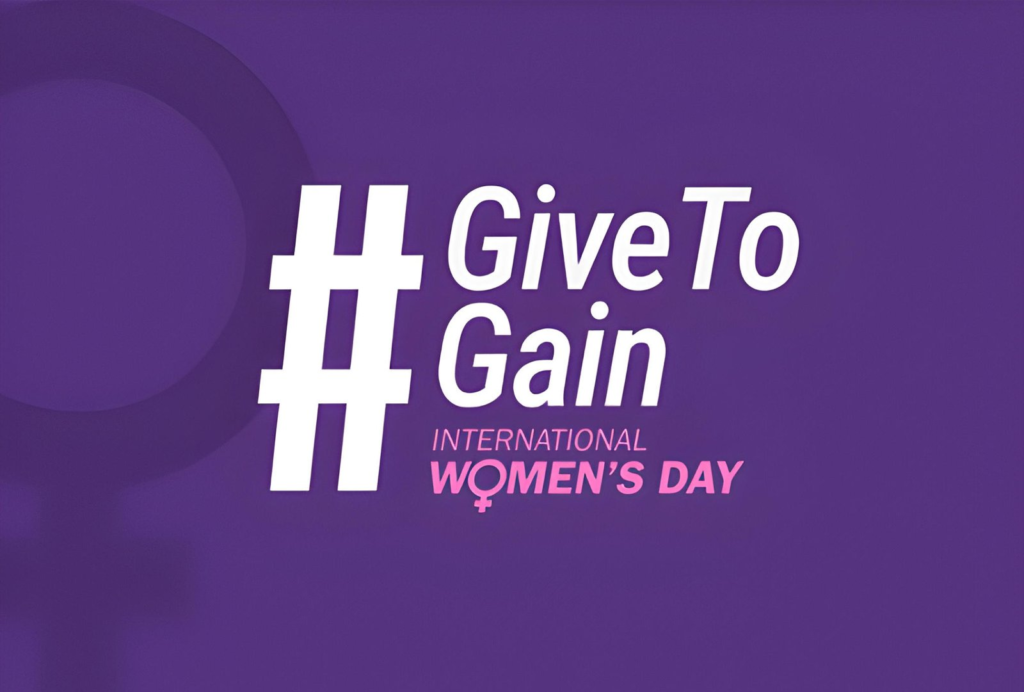
This International Women’s Day, the world unites under the theme Give to Gain, a call rooted in reciprocity: when individuals, organizations, and communities invest generously in women, the benefits multiply far beyond the recipient. Giving time, sponsorship, visibility, access, and genuine advocacy is not subtraction. It is, as the IWD campaign puts it, intentional multiplication.
For business leaders, this theme is not an abstraction. It is an operational directive. The organizations that have genuinely moved the needle on gender representation share a common characteristic: their senior leaders give in concrete, accountable ways. They give stretch assignments to high-potential women who have not yet been given the chance to stretch.
They give sponsorship with teeth, not networking with pleasantries. They give transparent data on promotion and pay gaps, because transparency is the accountability mechanism that makes everything else work. And they give the time and institutional commitment required to treat this not as a cultural aspiration, but as a business priority with owners, deadlines, and consequences.
The stakes of getting this wrong are not abstract. At the current pace of progress, full gender parity in senior leadership will not be achieved until 2053, according to Grant Thornton’s Women in Business 2024 report, and some projections place true structural parity as far out as 2158.
Every year that organizations delay meaningful action compounds that timeline. The women who should be leading your organization in ten years are already in it today. Whether they reach those roles depends entirely on what leaders choose to give them now.