When someone joins a new organisation, they are introduced to the systems, processes and responsibilities that come with the role. They learn where to find information, whom they report to and what is expected of them. At the same time, they begin learning something less tangible: how the organisation works as a community.
A new employee pays attention to how people speak to senior leaders, how meetings are conducted, how disagreements are handled, how feedback is given and what forms of interaction are considered appropriate. Some of these expectations are explained during onboarding.
Others emerge through observation, conversations with colleagues and everyday experience. Over time, these encounters shape an employee’s understanding of what is considered professional within that organisation.
This raises an important question about the workplace: who teaches employees the rules that shape professional behaviour?
The answer can vary across organisations. HR teams may establish formal standards, while managers explain expectations within their teams. Colleagues often provide informal guidance through everyday interactions, and employees can also learn workplace norms through their own experiences. In some situations, an expectation becomes clear only after an employee has unknowingly crossed it.
This becomes increasingly relevant as Nigerian organisations bring together people from different generations and professional backgrounds. Employees can hold different views about hierarchy, communication, authority and workplace relationships, shaped by their experiences and the environments in which they have worked. Even a familiar workplace interaction, such as addressing a senior leader, can carry different meanings depending on the organisation and its culture.
These differences can influence much more than workplace etiquette. They can shape how employees communicate with leaders, how comfortable they feel asking questions, how they interpret feedback and how they navigate authority within the organisation. The way expectations are communicated can therefore have a direct bearing on how employees experience the workplace.
Clarity plays an important role here. Employees need to understand the culture they are joining, while managers need to communicate expectations in ways that employees can understand and apply. Leaders also influence workplace culture through the behaviours they demonstrate every day.
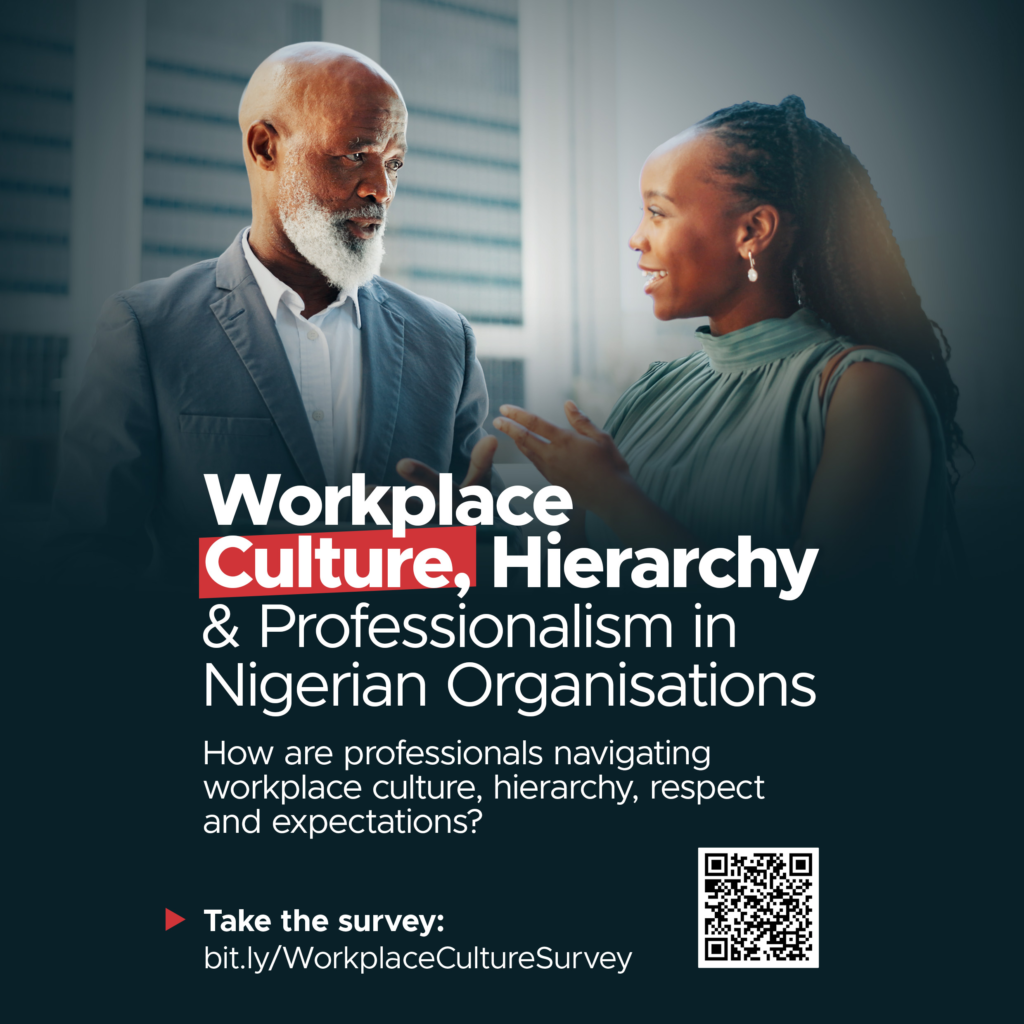
This is the focus of our current research into workplace culture, hierarchy, respect and professionalism in Nigerian organisations. We want to understand how professionals experience workplace expectations, where those expectations are communicated, how employees learn the culture of their organisations and how these perceptions vary across generations and career stages.
The research will help build a clearer, evidence-based understanding of workplace culture in Nigeria. It will also provide insights that can help organisations with employee onboarding, management development, and the communication of professional expectations.
We would like to hear your perspective as part of this research.

Take the survey:
https://forms.cloud.microsoft/r/pq1jGWikYT